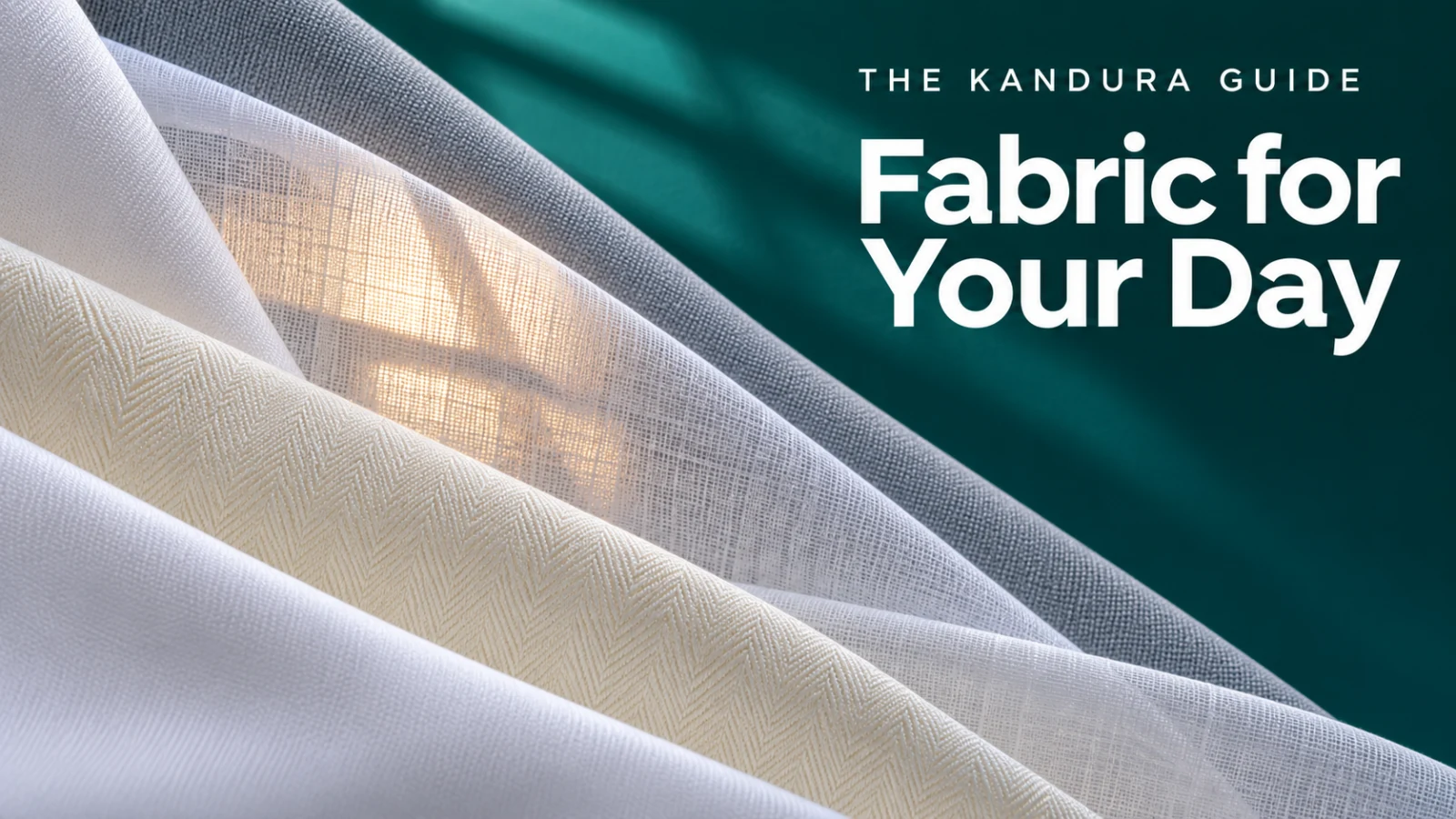
Fabric is often the first decision in a kandura purchase, yet it becomes more straightforward when you begin with your routine instead of a material name. Think about a normal week: the journey to work, time spent indoors, errands, family visits and the cleaning arrangements available to you. The same cloth can be experienced differently by people with different schedules and preferences. A useful shortlist connects those circumstances with the samples actually available at a branch. This guide explains how to compare fabrics systematically, record what you notice and ask questions that help a tailoring team understand what you want from the finished garment.
Define the problem your next garment should solve
Start with a kandura you already own. Decide whether the main issue is feel, appearance, movement or maintenance. You may like its drape but dislike the way it creases during a commute, or enjoy the shade while finding the care routine inconvenient. Separate these observations rather than describing the whole garment as unsuitable. A change in fit might solve discomfort that you initially attributed to fabric. Conversely, a different material may be needed when a well-fitting garment still feels wrong for the intended use. Give the branch a specific example of the problem so its advice can address the right part of the decision.
Ask for information about the exact sample
Ask the team to identify the sample and explain any available composition and care information. Keep the reference with your notes. Similar-looking fabrics can have different constructions, finishes and instructions, so a broad description does not establish that two samples are equivalent. If a packaging label uses a familiar name, confirm what it means for that particular piece. You do not need to memorise textile terminology, but you should understand what is being offered. Ask for unclear statements to be explained in ordinary language. When information cannot be confirmed, record that uncertainty instead of turning an assumption into a purchase requirement.
Compare feel using the same simple test
Handle each permitted swatch in a consistent way. Run it gently between your fingers, drape it across your hand and notice its weight and texture. Compare the samples side by side rather than relying on memory after moving around the shop. Avoid pulling, scratching or otherwise damaging the material during inspection. Describe the difference in language that is useful to you: smoother, firmer, lighter or more textured. These are observations of the sample, not guarantees of performance after wear. If you are comparing a new swatch with a garment that has been washed repeatedly, remember that they are not being assessed in identical conditions.
Consider opacity as a complete outfit question
Opacity depends on the particular cloth and the way it is worn. Inspect the sample against a relevant background and ask how it will be used in the finished garment. Discuss the undergarments you normally wear without assuming that a thicker-looking sample will automatically provide the result you want. Check the actual shade as well, because a bright white and a warmer off-white can give different impressions under the same light. If you have an especially important modesty or appearance preference, explain it directly during the consultation. The useful outcome is agreement about the intended result, rather than a prediction based on a small photograph.
Think about drape and fit together
Drape describes how the fabric falls, but the finished silhouette also depends on the garment's cut and construction. Ask how a sample is likely to behave with the style you prefer, and use a reference garment to explain the overall effect. A fluid-looking fabric cannot compensate for an unsuitable shoulder position, and a precise measurement alone does not dictate every visual detail. Consider the amount of room needed for sitting, walking and reaching. If you prefer a particular shape at the neckline or sleeves, discuss that preference before selecting the cloth. This keeps the fabric decision connected with the garment that will actually be made.
Match maintenance to your real schedule
Read the care information before deciding whether the material suits you. Someone who uses a professional laundry service may organise care differently from someone who washes garments at home. Neither arrangement makes an unsupported cleaning method safe. Check washing, drying, pressing and any professional-cleaning instructions supplied for the actual cloth or garment. Ask how decorative or detachable parts should be handled. Do not buy on the assumption that a previous kandura's routine will apply unchanged. If maintenance is a major concern, tell the branch early so you can compare the available options with that practical requirement in mind.
Evaluate colour beyond a phone screen
Use catalogue photographs to narrow your colour family, then compare actual swatches in person. Phone displays, automatic image processing and shop lighting can alter how a shade appears. If possible, view the shortlisted samples under more than one ordinary light source, following the branch's arrangements. Place them beside the accessory or garment colours you already use. Avoid choosing from an isolated close-up when you need the fabric to coordinate with a broader outfit. If you photograph a sample for later discussion, include its reference in your notes. Several unlabelled images of similar white fabrics are difficult for either you or the team to identify reliably.
Use a small comparison sheet
Limit the shortlist to a manageable number and record the same information for each option. Note the reference, observed feel, preferred shade, care information and any question still awaiting confirmation. Leave room for the team's comments about suitability for the intended garment. The purpose is not to score every material with artificial precision; it is to avoid forgetting a meaningful difference. A simple comparison also helps if you return on another day or speak with a different staff member. Before ordering, reconfirm the selected reference against the actual sample so an earlier discarded option does not remain attached to the final message.
Confirm availability and order details separately
Once you prefer a sample, ask the branch to confirm its current availability and explain how to proceed. A photograph in an online catalogue does not confirm the quantity or colour held at a particular location. Include the reference when making a WhatsApp enquiry, together with the intended use and any occasion date. Ask about fitting and collection arrangements rather than assuming a universal process. Agree on price and specifications directly before placing the order. If you need several garments, discuss whether they are intended to match and what information the team needs to confirm that request. Keep the final agreement together with the reference.
Review the choice after ordinary wear
Once you have worn the finished garment, assess it during the activities that motivated the purchase. Note comfort while seated, appearance after a typical journey and whether the care routine fits your week. Distinguish the experience of the fabric from issues that may relate to fit or construction. If you have a concern, contact the branch with a clear description instead of experimenting with a new cleaning or pressing method. These observations form a useful brief for your next purchase. Over time, a small record of what works for your routine can be more valuable than relying on brand names, colour photographs or someone else's preference alone.
Questions and answers
1. What is the best kandura fabric for daily wear?
There is no universal answer. Compare the actual samples against your activities, preferred feel, fit and maintenance arrangements.
2. Can a material name confirm fabric performance?
No. Ask about the specific sample, its composition and care information, and assess it with the branch team.
3. Should I choose fabric before discussing the cut?
Discuss them together. The cloth and construction both affect how the finished garment looks and moves.
4. Is a catalogue image a reliable colour reference?
It is useful for a shortlist, but the actual sample should guide the final choice because screens and lighting change appearances.
5. What should I include in a fabric enquiry?
Send the product reference, preferred shade, intended use, chosen branch and any date relevant to your request.
