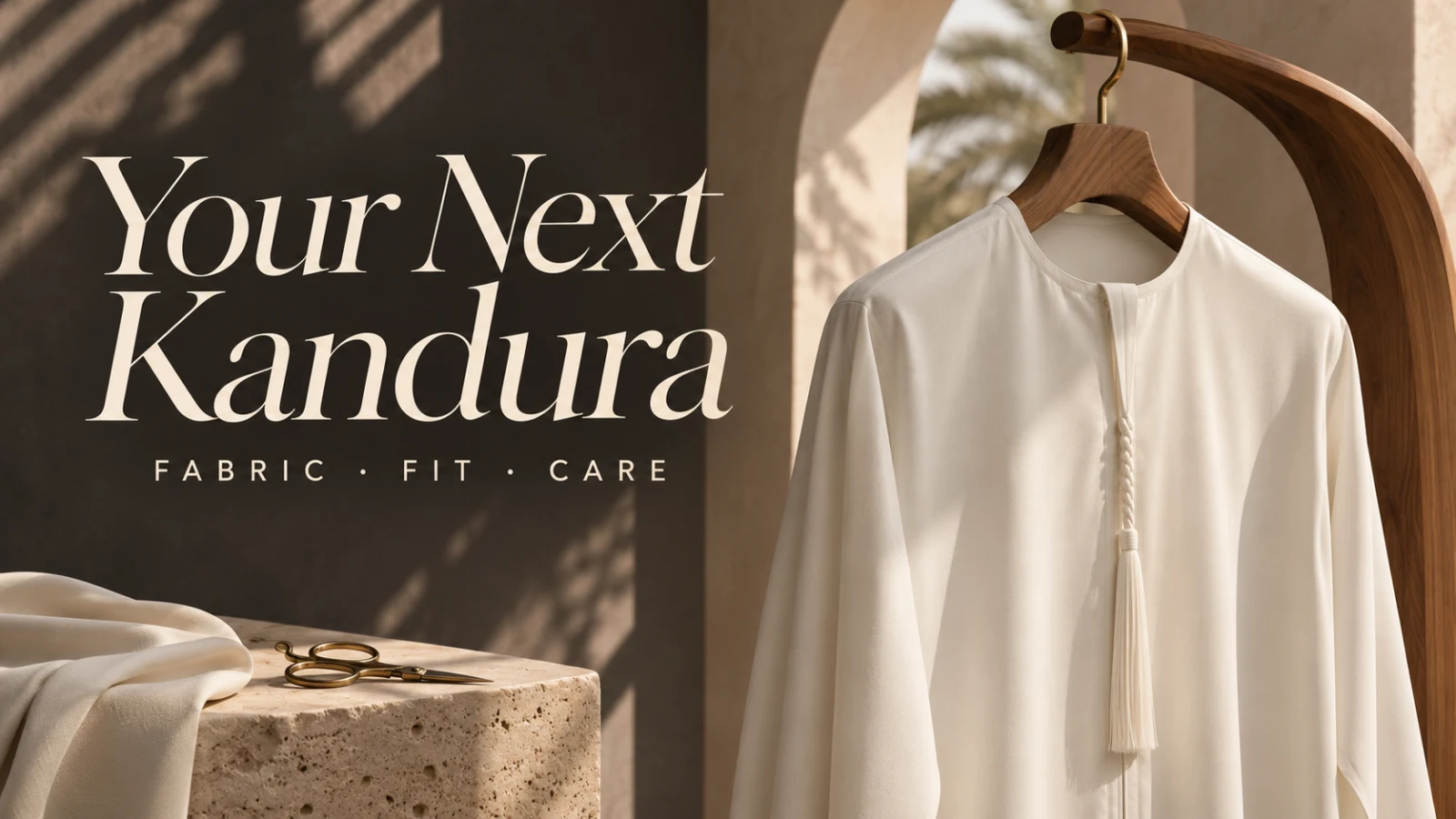
Choosing a kandura is easier when you separate three decisions: the fabric you will wear, the fit you want and the care you can realistically maintain. A photograph can introduce a colour or design, but it cannot tell you how that particular cloth feels after several hours, how it moves when you sit or which cleaning method its label permits. Treat browsing as preparation for a useful conversation. Make a short list, note the catalogue references and compare the actual options before committing to a garment. This approach works whether you are replacing a daily favourite or planning an outfit for an occasion.
Start with an ordinary day
Describe where the kandura will spend most of its time. A working day might involve a car journey, an air-conditioned office, outdoor errands and long periods seated at a desk. A garment chosen mainly for occasional gatherings may have different priorities. Think about movement, pocket use, cleaning frequency and the shoes you normally wear. These practical details give the branch more useful information than a request for the best fabric. There is no single best choice for every wearer. Write down what you like about your current kandura and one or two things you would change, rather than beginning with an unfamiliar material name.
Compare fabric without relying on a label alone
Ask which materials are available and read the composition information supplied for the exact fabric. A familiar trade description, country reference or packaging design should not replace a clear explanation of the material. Handle the swatch, drape it over your hand and compare it with another option under the same conditions. Consider softness, weight, texture and the way it falls. These observations help you explain preferences even if you do not use technical textile terms. If the information is incomplete, ask the team to clarify it before ordering. Do not assume that two fabrics with a similar appearance share the same construction or care requirements.
Look at opacity and colour in context
Hold the fabric against a suitable background and view it in more than one ordinary light source where possible. Compare white and off-white shades beside the undergarment or accessory colours you expect to use. A mobile screen can alter the impression of a shade, especially when automatic brightness or a warm display setting is active. The decision should therefore be based on the actual cloth. Ask permission before photographing samples, and make sure each image can be traced to the correct reference. A photograph without a reference number can become confusing when several nearly identical shades are on your shortlist.
Use a reference garment constructively
A kandura that you already enjoy wearing is useful evidence of your preferences. Bring it to an agreed fitting and point out the shoulder line, sleeves, length and amount of room through the body. Explain whether you want to reproduce those features or make changes. An older garment may have changed through wear or laundering, so it should not automatically become the sole measurement guide. Your current measurements and the tailor's assessment still matter. If your reference garment fits poorly, say so clearly. Otherwise, a detail you meant to improve could be interpreted as something you wanted to copy exactly.
Test fit through normal movement
Looking comfortable while standing still is only part of a fitting. Where a fitting is available, sit naturally, take a few steps and move your arms as you normally would during the day. Notice pulling at the shoulders, restriction around the elbows and the behaviour of the neckline. Explain the sensation rather than trying to prescribe a technical alteration yourself. A clear comment such as the sleeve pulls when I reach forward is more useful than asking for an arbitrary extra measurement. Wear or bring the footwear you expect to use when discussing length, because the overall impression can change with a different sole height.
Choose details as part of the garment
Collar shapes, pocket styles and tassels should support the way you use the kandura. A photographed sample board can help you identify a detail, but ask whether that option works with your selected fabric and the construction available through the branch. Consider practical issues such as the items you carry and whether decorative details will need particular care. Avoid adding a feature solely because it looks attractive in an isolated photograph. Compare the complete combination instead. Keep the final specification together so the fabric reference, measurements and finishing choices do not end up scattered across several unrelated messages or screenshots.
Read care instructions before buying
The care routine should be part of the decision, not a surprise after the first wear. Check the instructions for the specific fabric or finished garment and ask for clarification if they are unclear. A previous kandura may tolerate a process that is unsuitable for a different fabric, finish or trim. Do not assume that every white garment can be bleached, washed hot or pressed with the same setting. The GINETEX explanation of care labels is a useful general reference, but the instructions supplied with the garment take priority. If you use a laundry service, keep those instructions available to share with it.
Make an enquiry easy to answer
Send the branch a focused message with the product reference, preferred shade, intended use and any date you are working toward. If you need a fitting, ask how to arrange it before travelling. If you are enquiring about a photographed item, distinguish that item from a general style request. The branch can then check the relevant option instead of interpreting a broad description. Availability, prices and completion arrangements should be confirmed directly. A website photograph is not a live stock reservation, and an enquiry message is not an order confirmation. Ask the team to summarise the agreed next step so both sides understand what happens afterward.
Keep the collection appointment useful
When the garment is ready, allow time to inspect the details and discuss any concern before leaving. Compare the result with the agreed specification and, where appropriate, try it with your usual footwear. Check how the sleeves, neckline and pockets feel in ordinary use. Ask how any detachable component should be handled during cleaning and confirm the care guidance again if necessary. Keep the order information and reference for future conversations. A clear record can make a later repeat enquiry easier, although measurements, fabric availability and prices should still be reconfirmed rather than assumed to remain unchanged indefinitely.
Build a decision you can repeat
After wearing the kandura, note what worked in practice. Perhaps the colour coordinated easily, the pocket was convenient or the fabric needed a different care routine than expected. These observations are more useful for a future purchase than a general impression that a garment was good. Review the result across several normal activities, and separate a preference about fit from a preference about fabric. Take those notes to your next branch conversation. A considered choice does not need a complicated wardrobe or a large order; it needs enough information to connect the garment with the way you actually live and dress.
Keep that practical brief with the reference so a later enquiry begins with your own observations rather than assumptions.
Questions and answers
1. Can I choose a kandura entirely from a photograph?
A photograph can help shortlist a design or shade. Confirm the actual fabric, fit, care requirements and branch availability before ordering.
2. Should I bring an existing kandura to a fitting?
Yes, if it helps explain your preferences. Identify the details you want to keep and those you want changed; the team should still assess current measurements.
3. Does every white kandura need the same cleaning method?
No. Follow the instructions for the particular garment, fabric and trim rather than applying one routine to every white item.
4. How should I enquire about a catalogue item?
Include its reference, your preferred colour or detail, the branch you want to visit and any relevant occasion date.
5. Does a WhatsApp enquiry reserve stock or confirm an order?
No. The branch must confirm availability, specifications, price and the arrangements for proceeding with the order.
Explore the options
General references: GINETEX care-symbol guidance.
